Model Architecture Planning

Python Developer | Audio Editor | Technical Writer | OSS Contributor | Tag Moderator @ @ThePracticalDEV | Valorant TonyPoppins #881488
Search for a command to run...

Python Developer | Audio Editor | Technical Writer | OSS Contributor | Tag Moderator @ @ThePracticalDEV | Valorant TonyPoppins #881488
No comments yet. Be the first to comment.
Learn to jumpstart a production-ready blog using the Cookiecutter-Django framework and how to deploy it to Heroku
In writing models in Django, we have to follow the coding standards that are stated in the docs. A few pointers to remember are all field names should be in lower case, and should be using underscores instead of camelCase. The next tip is that the cl...
A no-fluff deployment runbook for getting a Cookiecutter Django project live on DigitalOcean using Docker and Traefik. Covers the full path from droplet provisioning to a working production deployment

If youāre switching between networks with different trust levelsāhome, cafĆ©, coworking spaceāyou probably donāt want your VPN behavior to be static. This guide walks through a clean, system-level way

Why this script exists If you've ever watched your free disk space quietly shrink over a few weeks of active development, you know the feeling: yesterday you had plenty of headroom, today your IDE is

A message from a colleague dropped into my inbox one morning: Hi Ice, now that we pushed the changes sa site, we need to scour the site for mentions of Level 1, Level 2, Level 1/2 and change them acc

Backing up your WordPress site is one of the most important maintenance tasks you can do as a site owner. While plugins like UpdraftPlus or Jetpack make this easy, knowing how to do it manually via SS

Django is based on the Model-View-Template software design architecture, which means that the Model takes care of our data and logic, the views will take care of what the users will see in the browser when you render your site, and the templates will take care of what we render as HTML, CSS, Javascript and our dynamic content.
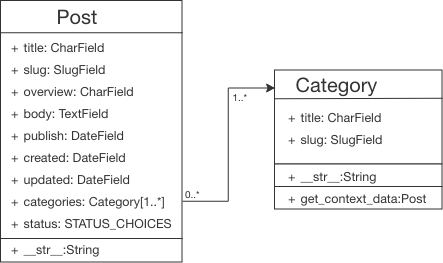
It's good to visualize our models before defining them in our models.py for us to see how our model structure would be laid out. The figure below shows how we will determine the database of the blog we're building.
models.py
We've created the models for Post and Category. The figure we created also shows the relationship between both models including its multiplicities. According to moz://a are the numbers on the figure that shows the numbers (maximum and minimum) of each model that may be present in the relationship.- moz://a.
Now that we know ow we'll layout our models, let's start creating our project with the Cookiecutter-Django framework so we won't have too much of a hard time deploying our app in production.